Imagine you are a student who just received a low grade on a test. Immediately, your mind searches for explanations:
“The test was too hard.”
“The professor was not clear enough.”
“The questions were not fair.”
In other words, you attribute your poor performance to external factors, circumstances outside your control. But if you saw another student get a low grade on the same test, your interpretation might instantly shift:
“They probably did not study.”
“They are not very serious.”
“They must not understand the material.”
Now, you attribute their performance to internal factors, something about who they are.
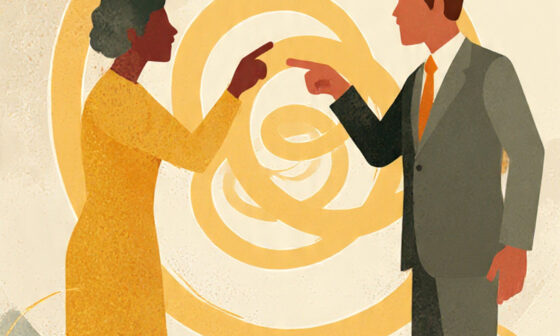
This difference in how we explain our own behavior versus others’ behavior is known as the Actor-Observer Bias.
What is the Actor-Observer Bias?
The Actor–Observer Bias is a cognitive bias that leads us to:
- Excuse our own mistakes by blaming external circumstances
- Blame others’ mistakes on their personality, abilities, or character
In short:
- When we are the actors, we see the situation.
- When we are the observer, we see the person.
This bias appears everywhere, in relationships, in workplaces, in classrooms, and even in everyday activities.
Why Does the Bias Exist?
We have more context about our own life
You know:
- Your intentions
- Your struggles
- Your stress levels
- Your reasons
But you do not have that same access to other people’s internal world. So you fill the gap with assumptions.
We want to protect our self-image
Blaming circumstances protects our ego. And blaming people makes explanations simple and seems easy.
People are more noticeable than situations
When observing someone else, the person stands out visually, not the background circumstances.
Real-Life Examples of the Actor-Observer
In Traffic
- You cut someone off: “I did not see them; the lane was confusing.”
- Someone else cuts you off: “What a reckless driver.”
At Work
- You miss a deadline: “The workload was overwhelming.”
- A coworker misses a deadline: “They are irresponsible.”
In Relationships
- You snap at someone: “I am tired, stressed, or overwhelmed.”
- Someone snaps at you: “They are rude, impatient, or disrespectful.”
The Danger of Actor-Observer Bias
This bias can quietly damage:
- Relationships (by making you overly harsh toward others)
- Self-growth (by preventing you from taking responsibility)
- Judgment (by making you see others through a distorted lens)
- Compassion (by making you forget that others also struggle)
When left unchecked, it creates a world where:
- We are always the victim
- And others are always the problem, and nothing changes.
How to Overcome the Bias
Pause before judging
Ask: “Could there be external reasons for their behavior; just like there would be for mine?”
Switch roles mentally
Imagine you are them. Imagine their day, pressures, fears, or limits.
Accept responsibility
Do not always look outward for excuses. Growth begins inward.
Practice empathy daily
Everyone has burdens you can not see. Give them the same grace you want for yourself.
Read Also: Fundamental Attribution Error: What It Is And How to Avoid It
Read Also: Too Fast, Too Flawed: The Hasty Generalizations Fallacy
Read Also: The Strawman Fallacy: How We Misrepresent Others (and Let Others Misrepresent Us)
Conclusion
The Actor-Observer Bias reminds us of something humbling: We are quick to protect our own image, but quick to judge others.
Breaking this bias does not just make you smarter; it makes you kinder, fairer, and more emotionally mature. It allows you to see people not through the lens of judgment, but through the lens of understanding.
And that shift can transform not just how you think, but how you live.