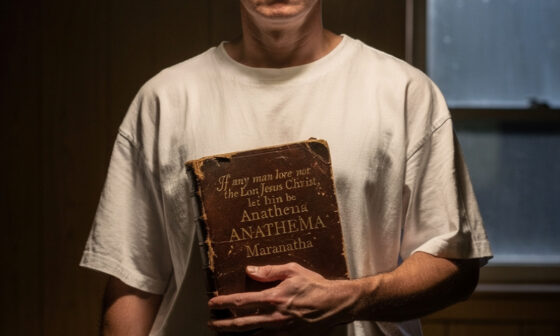
There is something I am sure we have learnt over and over again, I certainly have: Not everything that looks spiritual is truly rooted in truth.
Sometimes, what we see in the name of Christianity is not always aligned with the Word of God; it may look sincere, it may even feel powerful, but when we examine it closely, we begin to notice that some practices are built more on tradition than on Scripture. And that realization raises an important question for me, and it should for you too: Are we building our faith on God’s Word, or on traditions that have been passed down without being questioned?
When Tradition Becomes Authority
Traditions are not always bad. In fact, some traditions can help preserve important values and teachings, but the problem begins when tradition becomes more authoritative than Scripture. In fact, it reminds me of 2 Corinthians 10:5: “we demolish arguments and every pretension that sets itself up against the knowledge of God, and we take captive every thought to make it obedient to Christ.”
When we stop asking whether something is rooted in God’s Word and simply accept it because “that is how it has always been done,” we begin to move away from truth. I have noticed that many people grow up practicing certain things in church without ever asking why. They inherit beliefs, rituals, and practices without examining their foundation.
And over time, those practices become normal, even if they were never rooted in Scripture to begin with, and this is how man-made traditions slowly gain influence.
One of the most dangerous aspects of unscriptural practices is how subtle they can be. They do not usually appear suddenly. Instead, they develop gradually.
A small practice is introduced; it is repeated over time, people begin to accept it, and eventually, it becomes part of the system. And before long, it is no longer questioned.
What started as an addition becomes an expectation, and what was once optional becomes necessary. This gradual shift can make it difficult for some to distinguish between what is truly biblical and what is simply cultural or traditional.
The Problem With Depending on Physical Objects
One area where this issue becomes very clear is in the use of physical objects for spiritual purposes. In some places, people are taught to rely on items such as oil, water, handkerchiefs, or other materials as a means of receiving spiritual power or protection.
While these practices may appear meaningful, I have had to ask myself an important question: Does the Bible teach that our faith should depend on physical objects?
When I look closely at Scripture, I see something different. Christianity is not presented as a system of rituals or objects; it is presented as a relationship with God through Jesus Christ.
God is not distant. He does not require physical mediums for us to connect with Him. He lives in us by His Spirit.
When we begin to depend on objects, we risk shifting our focus away from God and placing it on things that were never meant to carry that weight.
When Worship Becomes Performance
Another area where traditions can take over is in worship. Worship is meant to be a sincere expression of our relationship with God. It is something that comes from the heart, and is guided by the Spirit.
But sometimes, and for some people, maybe because of a lack of understanding, worship can slowly turn into something else. It can become performance; it can become routine, and it can become something we do outwardly without understanding its true purpose.
I have been taught by my Very Very Highly Esteemed Rev. Dr. Chris Oyakhilome Dsc. DSc DD. Rev. about situations where certain styles, movements, or expressions are introduced into worship without careful consideration of their origin or meaning.
And over time, these practices can become normalized, even if they do not reflect true spiritual worship. This is why it is important for us to continually return to the Word of God as our foundation.
The Warning Against Traditions of Men
The Bible itself warns us about the danger of traditions that are not rooted in truth. In Colossians 2:8, we are told to be careful not to be taken captive through philosophy and empty deception based on human tradition rather than Christ.
This warning is important because it reminds us that not everything that appears spiritual is aligned with God’s truth. Some traditions may have good intentions behind them, but good intentions do not always guarantee truth.
This is why we must be discerning; we must be willing to ask questions. We must be willing to examine what we practice. We must be willing to align our lives with Scripture, even when it challenges what we are used to.
The Simplicity of True Christianity
One of the most refreshing truths I have come to appreciate is the simplicity of genuine Christianity. It is not complicated; it is not dependent on rituals; it is not based on physical objects.
At its core, Christianity is about knowing God and walking with Him through His Word and Spirit.
We do not need special items to connect with God; we do not need rituals to access His presence, and we do not need traditions to make our faith valid.
God’s presence is already within us. When we understand this, it changes everything, and our focus shifts from external practices to internal transformation.
If there is one thing I have learned, it is that the Word of God must remain our foundation. When we stay grounded in Scripture, we are less likely to be misled by practices that do not align with truth.
The Word gives us clarity! It gives us direction! It helps us discern what is right from what is not.
Without that foundation, it becomes easy to accept ideas simply because they are popular or widely practiced. But when we know the Word, we can evaluate everything through the lens of truth.
Returning to True Worship and Faith
At some point, each of us must decide what we will build our faith on. Will we follow traditions without question? Or will we seek to understand what God’s Word truly teaches?
Returning to true worship and faith requires intentionality. It requires us to:
- Study the Word for ourselves
- Be open to correction
- Let go of practices that are not rooted in truth
- Focus on our relationship with God
This process is not always easy, especially when it involves unlearning things we have believed for a long time. But it is necessary if we want our faith to be genuine and grounded in truth.
Read Also: What Does It Mean To Blaspheme Against The Holy Spirit?
Read Also: The Law Of Faith: Pastor Chris
Read Also: The Danger of Silence: When Good Men Refuse to Act
Conclusion
Man-made traditions can be subtle, but their impact can be significant. When we allow traditions to replace Scripture, we risk building our faith on something unstable.
But when we return to the Word of God, we rediscover the simplicity and truth of what it means to follow Him. And for me, this realization has been both challenging and freeing.
It challenges me to examine what I believe and why, but it also frees me from unnecessary burdens and distractions. Our faith is not meant to depend on traditions, rituals, or objects.
It is meant to be rooted in truth! And that truth is found in the Word of God!