I was recently listening to an episode of a podcast, the Daily Stoic Podcast, that posed a haunting but simple question: If you were tested, would you pass? It is the kind of question that stays with you long after the headphones are put away. The speaker of the Daily Podcast said that it reminded him of that 90s hit by The Mighty Mighty Bosstones, “The Impression That I Get.” The brass-heavy anthem where the lead singer, Dicky Barrett, said that he’s “never had to knock on wood.” (An idiomatic phrase used to ward off bad luck or ensure the continuation of good fortune after mentioning a positive situation or future hope.)
But if you listen closely to the lyrics of the third verse, there is a profound philosophical thought hidden beneath the rhythm:
I am not a coward; I have just never been tested
I would like to think that if I was I would pass
It is a stunningly honest admission. Most of us go through life under the “impression” that we are courageous, loyal, and resilient. We view ourselves through a heroic lens, assuming we would be the ones to stand tall in a crisis or remain faithful under pressure, but the truth is, until the world pulls the rug from under us, that self-image is nothing more than a hypothesis, because it is an untested theory, and as the Stoics would tell us, an untested life is a life of “nagging doubt.”
The Misfortune of a Soft Life
This sentiment aligns perfectly with one of Seneca’s most interesting observations. Writing to his friend Lucilius, the Roman Stoic offered a perspective that seems completely counterintuitive to our modern pursuit of comfort: “I judge you unfortunate because you have never lived through misfortune,” Seneca wrote. “You have passed through life without an opponent; no one can ever know what you are capable of, not even you.”
Not even you! Yes, you! You, reading this article! My dearest reader.
Think about the weight of those three words; you can have all the wealth in the world, a sterling reputation, and a career that everyone envies, but if you have never faced a true opponent, be it grief, failure, or a moral dilemma that cost you something, you are essentially a stranger to yourself. You are living with an “impression” of character rather than the reality of it.
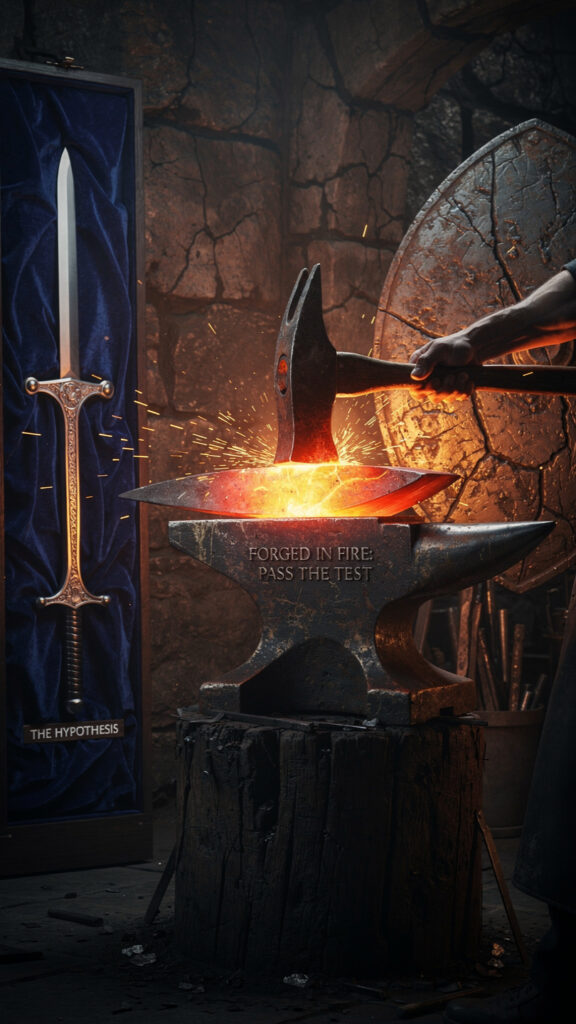
This is why many successful people feel a strange, underlying dissatisfaction. On paper, everything is going their way, and they have avoided the storms. But, deep down, there is a lingering insecurity, and they wonder: Am I actually strong, or am I just lucky? Am I actually a person of integrity, or have I just never been offered a high enough price to sell out? This doubt is the tax some people pay for living a sheltered life.
The Character Audit: Why Adversity is Tuition
In the world of finance, an audit is a systematic examination of records to ensure everything is as it seems. In the spiritual world, adversity is the auditor; it comes to check the books of our soul; it does not just come to destroy us; it comes to reveal us.
When we are tested, the “impression” we have of ourselves is stripped away, and we are left with the raw data of our reactions. Do we crumble into bitterness? Do we compromise our values for safety? Or do we find a reservoir of strength we did not know we possessed? This is today’s article; the lessons of the Character Audit are so vital.
First, if you are currently going through a season of deep adversity, if you are being “punched in the face” by life, well, keep going. It is easy to view struggle as a sign that you are failing, but Seneca would argue the opposite. You are being granted the opportunity to finally know what you are capable of; you are paying the “tuition” of experience, so appreciate the clarity that comes from the struggle. You are learning about the world, yes, but more importantly, you are learning the truth about the person in your mirror. It is a test; do your best, and you will pass.
Second, if your life is currently smooth and unchallenged, realize that you might be depriving yourself of something essential. A ship is safe in the harbor, but that is not what ships are for. If you never leave the dock, you will never know if your hull is truly watertight.
Even now, I remember the exact moment I first encountered and read those words a few months ago. It was not in a grand church or building, or at a motivational seminar; it was a quiet collision between my eyes and a sentence that seemed to vibrate with a haunting, ancient authority, or at least that was how it felt, and still does. Since that day, it has been weighing on my heart like a stone that refuses to be moved. I have carried it into my mornings and let it settle over my restless nights; it is a sentence that strips away every excuse I have ever made and leaves me standing naked before my own conscience. It whispers to me in the silence of my reflections, reminding me of the ultimate tragedy: “Your worst sin is that you have destroyed and betrayed yourself for nothing.”
We spend so much of our lives guarding against external enemies; we pray for protection from those who might harm us; we build walls against critics; and we navigate the bad paths of the world, hoping to remain untainted. But follow me for a moment, my dearest readers, what happens when the enemy is not at the gate? What happens when the person dismantling your destiny is the one staring back at you in the mirror? We often think of betrayal as something done to us by a friend or a stranger, but the most lethal betrayal is the one we commit in the privacy of our own choices. When I look at the habits I have allowed to persist and the discipline I have let slip, the mirror does not lie, and so again I am reminded of the statement “Your worst sin is that you have destroyed and betrayed yourself for nothing.”
Continue Reading: The Mirror’s Accusation: When the Person You’ve Betrayed is Yourself
Finding Your Opponent
How do we solve the unease of the untested without waiting for a tragedy to strike? We must learn to seek out our own opponents. We must stop prioritizing comfort as the ultimate goal of life.
And this should be your approach to growth: Put yourself out there! Take Risks! Not reckless ones, but risks that put your ego on the line. Start that project where failure is a real possibility. Get Your Hands Dirty! Engage with the world’s problems! Step out of your air-conditioned bubble and into the places where life is raw and difficult! Find Your Struggle! If life has not given you a challenge lately, create one! Push your physical limits! Master a difficult skill! Or commit to a discipline that requires you to say “no” to your impulses every single day!
When you voluntarily engage with struggle, you begin to put those nagging doubts to rest. You start to replace the “impression” of character with the “evidence” of it, and you stop wondering if you are a coward and start proving to yourself that you are a person of action.
The Insecurity of Good Fortune
We more often than not pray for good fortune, but we rarely consider the spiritual cost of it. Constant peace can be a mask; it is easy to be kind when everyone is being nice to you. It is easy to be patient when everything is on schedule, and it is easy to be faithful when there are no temptations.
But it should not just be about how we behave in the sunshine; it should very very much also be about who we are in the storm. The unease expressed in the Bosstones’ song is the soul’s realization that everything good that comes without a tested and trusted character is very much likely to come to an end. The weather will change; the opponent will eventually show up. If we have spent our entire lives avoiding the test, we will be paralyzed when the exam paper is finally placed on our desk.
Seneca’s “unfortunate” person is the one who is surprised by life, but the fortunate person is the one who has trained for the test, who has been “punched” and knows how to keep their feet; they have “knocked on wood” and realized that the wood did not break.
Read Also: How To Build A Strong Character
Read Also: Waking the Conscience: Moral Vigilance in the Face of Systemic Pressure
Read Also: Empty Boat Effect: Reclaiming Your Response in a World of Chaos
Conclusion
And so, my dearest readers, the question remains: If you were tested, would you pass?
Do not be content with an impression. Do not spend your life wondering what you are capable of. The Character Audit is a necessary part of a life well-lived; it is the process of moving from theory to reality, from a sheltered ego to a proven soul.
And if you are in the fire, stay there until the gold is purified! If you are in the shade, step out into the heat! Rise to the challenge! Put your doubts to rest! You will be better for the struggle, and for the first time in your life, you will truly know who you are, not just in words, but very, very much importantly in character and in conduct!