Imagine you are sitting in a classroom; the fluorescent lights are humming, the clock is ticking, and the teacher is standing at a chalkboard, writing down dates, formulas, or grammar rules. Your job is simple: Stay quiet, write it down, and remember it for the test.
For most of us, this is just what “learning” looks like, but in the 1960s, a Brazilian educator named Paulo Freire looked at this scene and saw something dangerous. He did not see a classroom; he saw a factory for making submissive citizens.
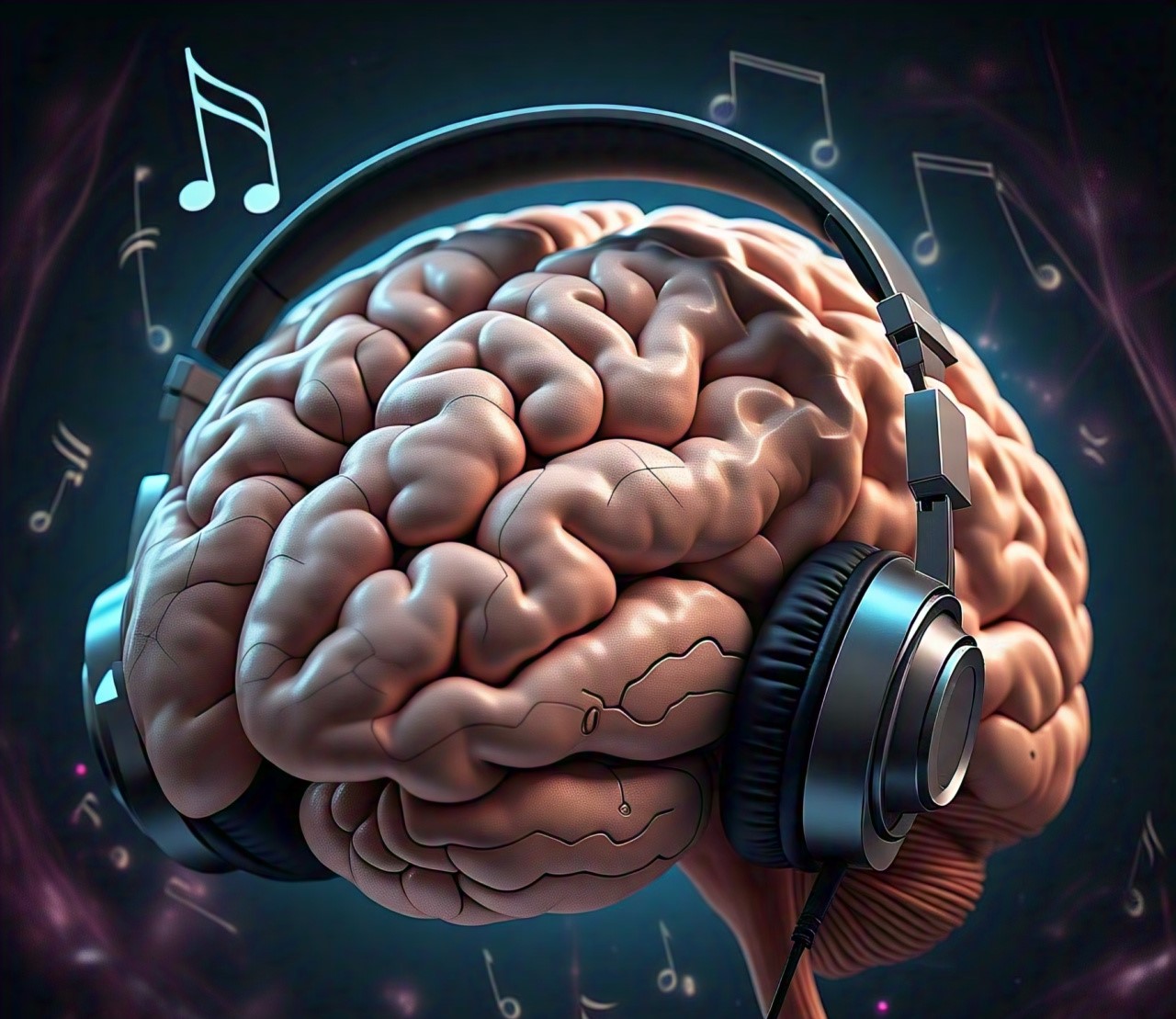
In his landmark book, The Pedagogy of the Oppressed, Freire argued that the way we learn is just as important as what we learn. If we are taught to be passive “containers” of information, we will grow up to be passive “containers” of injustice. And so to change the world, we first have to change how we think about our own brains.
The “Banking Model”: Why Schools Treat You Like an Account
Freire’s most famous critique is what he called the Banking Model of Education.
Think about how a bank works: You walk up to the teller, hand over some cash, and they deposit it into an account. The account does not do anything; it just sits there and holds the money.
Freire argued that traditional education treats students like those empty bank accounts. The teacher is the “depositor” who holds all the “wealth” (knowledge). The student is the “receptacle” who knows nothing. In this model:
- The teacher talks; the students listen.
- The teacher chooses what to learn; the students adapt.
- The teacher is the subject (the one acting); the students are the objects (the ones being acted upon).
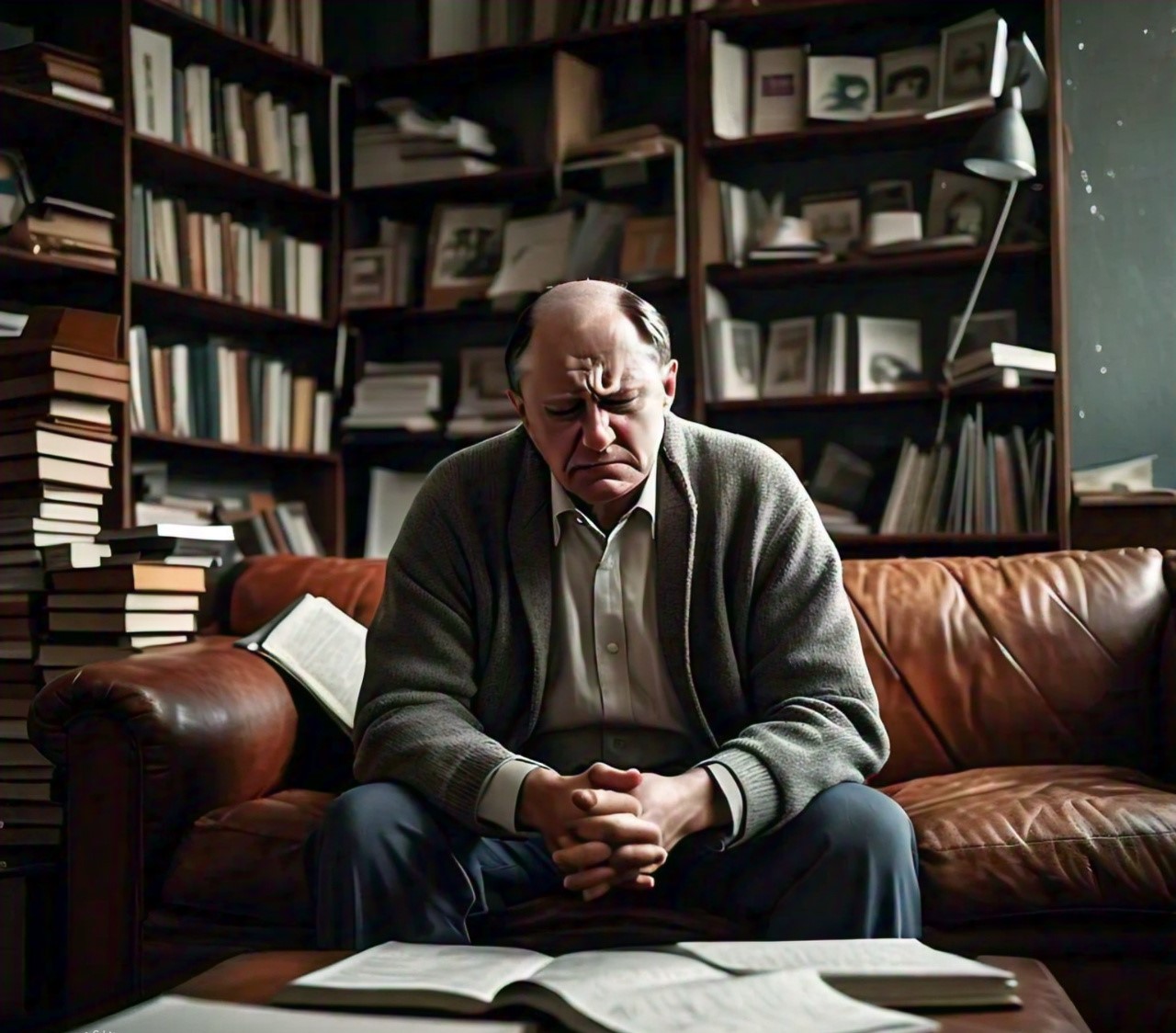
Why is this radical? Because Freire argued that this is not just a bad way to teach; it is a tool for oppression. When you are trained from age five to believe that your job is to receive “the truth” from someone in authority without questioning it, you are being prepared to accept whatever a boss, a government, or a system tells you later in life.
The Ghost in the Machine: The “Internalized Oppressor”
Take a minute to pause and think about this: Have you ever noticed that people who are bullied sometimes, if not most times, grow up to be bullies themselves? Or that someone who hates their micromanaging boss often becomes a micromanaging boss the second they get a promotion?
Freire had a profound explanation for this: He said that when we live in a society that is divided into “those with power” and “those without,” the oppressed people start to believe that the only way to be a person is to be like the oppressor.
And this is very very much because they have never experienced what true freedom is, and because of that, their only reference point for “success” is the person holding the whip. Freire calls this the “Internalized Oppressor.” It is like a ghost living inside your head, whispering that the goal of life is to get to the top so you can finally be the one doing the “depositing.”
But true liberation, according to Freire, is not just about flipping the script; it is not about the students becoming the teachers or the poor becoming the masters. It is very very much about creating a whole new way of being human with an objective mind of their own, where nobody is an object for someone else to use.
Conscientization: Waking and Standing Up to the Matrix
Freire did not just want people to learn how to read books; he wanted them to learn how to “read the world.” He worked with illiterate farmers in South America; he realized that if he just taught them to spell words like “water” or “land,” it did not change their lives. But if they talked about why they did not have clean water, or why they did not own the land they worked on, the letters started to mean something.
He called this process Conscientization (or conscientização in Portuguese). It is the “Aha!” moment when you realize that your poverty, your lack of education, or your unhappiness is not “just the way things are.” It is a result of a system that was built by people, and because people built it, people can tear it down and build something better.
Problem-Posing: The End of the Lecture
If the “Banking Model” is the disease, Problem-Posing Education is the cure.
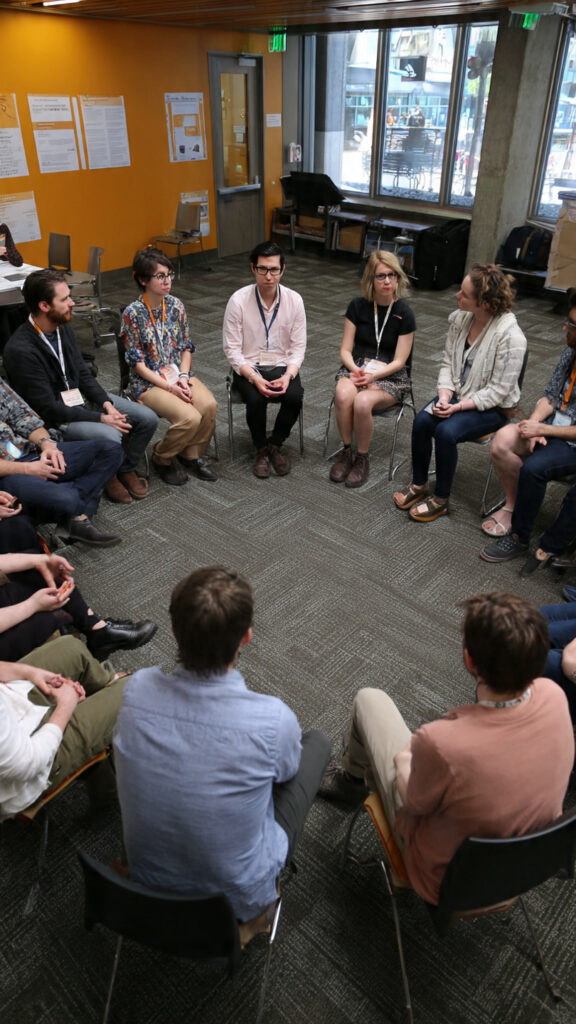
In a problem-posing classroom, the teacher does not stand on a pedestal. Instead, they sit in a circle with the students. The teacher’s job is not just give answers; it is also very very much to ask questions.
- Instead of: “Here are the three causes of the Great Depression. Memorize them.”
- The Teacher says: “We are seeing high inflation and expensive housing today. Why do you think that is? What do you see in your own neighborhoods?”
This turns the student from a “receptacle” into a researcher, and this is great because when you are a researcher, you are active. You are looking for the “why” behind the “what.” You are actively practicing how to be a free person.
Praxis: Thinking Without Doing is Just Daydreaming
Freire believed that knowledge is a circle he called Praxis. And praxis is the combination of Reflection and Action.
- If you have Action without Reflection, you have “activism” for the sake of it. You are running around breaking things or making noise, but you do not actually know why or what the long-term goal is.
- If you have Reflection without Action, you have “verbalism.” You can talk for hours at a coffee shop about how the world is broken, but if you never do anything to fix it, your words are empty.
True learning only happens when you think about a problem, take action to change it, and then reflect on what happened so you can do it better next time!
Read Also: The Law of Deliberate Practice: Turning Effort into Excellence
Read Also: Sharpen The Axe Before You Swing: The Wisdom of Ecclesiastes 10:10
Read Also: The Paradox of Hate and Bitterness
Conclusion
The reason The Pedagogy of the Oppressed is still a “radical” book today is that it challenges us to look at ourselves differently.
The system wants you to just be a piggy bank; it wants you to collect degrees, certificates, and “facts” so that you can be a more efficient part of the machine. But Paulo Freire tells us that we are not things to be filled. We are creators of culture! We are the architects of our own history and story!
So my dearest readers, the next time you find yourself in a meeting, a classroom, or even a conversation where you feel like a passive observer, remember: Your brain is not just a piggy bank for anything! You have the right to ask “Why?” and you have the power to act on the answer.