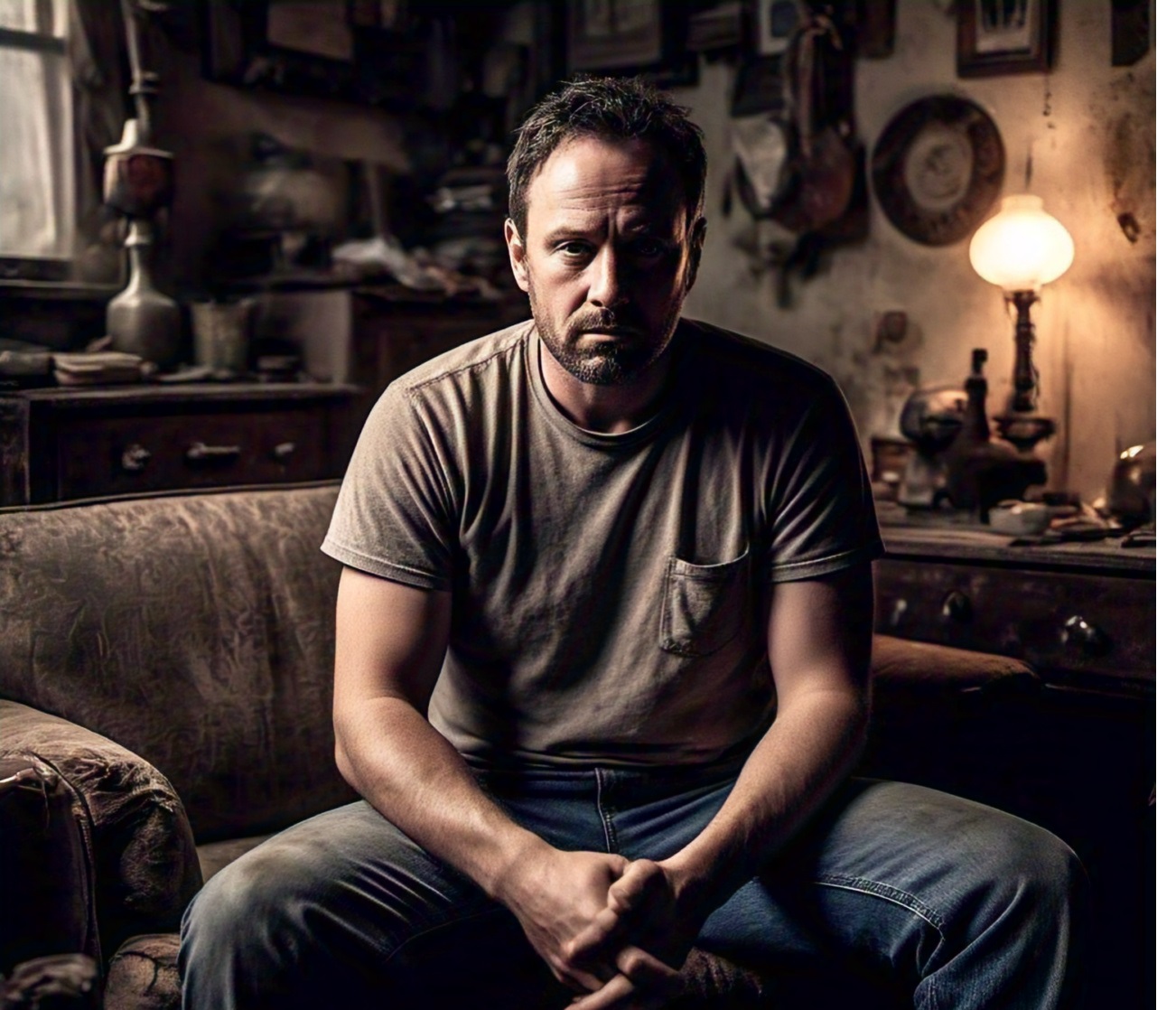
Socrates’ declaration, “The unexamined life is not worth living,” is more than a philosophical slogan; it is a challenge, a warning, and an invitation. It calls us to pause, to question, to reflect, and to evaluate the deeper layers of our daily existence. In a world where noise is constant and speed is worshiped, self-examination is unknown to so many people. For without it, we may move through life efficiently, yet aimlessly.
Reflection is the Beginning of Wisdom, Purpose, and Personal Power: To examine your life is to reclaim it.
What Socrates Really Meant
When Socrates spoke these words during his trial, he was not offering poetry, he was offering a principle. He believed that the highest human calling is not simply to live, but to live consciously. To examine your life means to ask:
- Why do I think the way I think?
- Why do I want what I want?
- Why do I act the way I act?
- Is the path I am on truly mine or inherited from culture, fear, or other people’s expectations?
Life without these questions becomes mechanical, reactive, and shallow. We become driven by momentum instead of meaning.
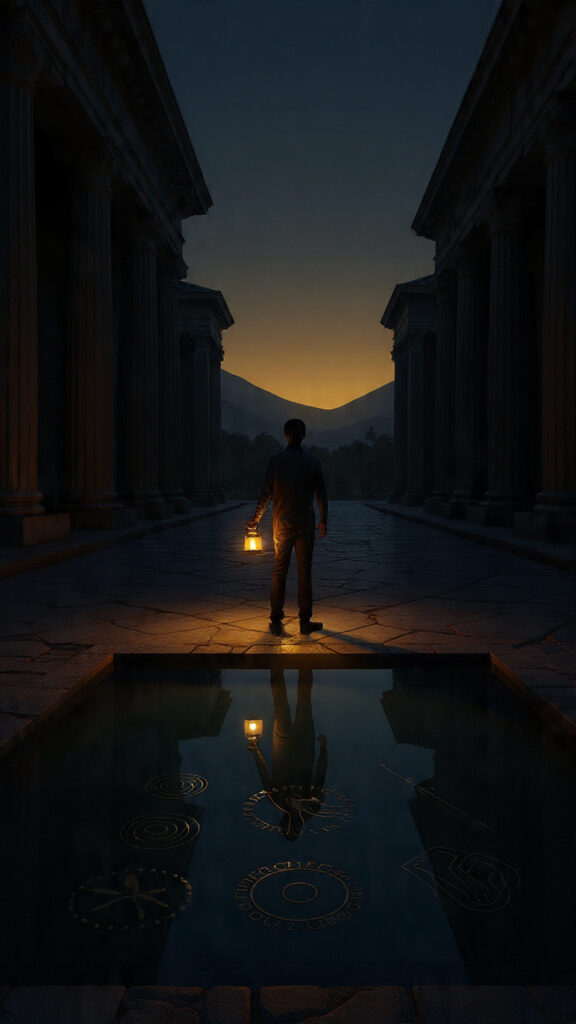
Reflection is the Foundation of Growth
You can not grow beyond what you never pause to understand. Self-reflection is not self-doubt; it is self-direction. Just as a gardener inspects the soil before planting, you must inspect your beliefs, habits, and motivations before expecting a fruitful life.
When you examine your life:
- You confront destructive patterns
- You clarify your true priorities
- You identify what needs to change
- You discover the values you want to live by
Self-awareness does not just reveal who you are; it reveals who you can become.
The Danger of the Unexamined Life
A life without reflection leads to:
- Repetition of mistakes
- Chasing goals you do not truly want
- Emotional impulsiveness
- A sense of emptiness despite accomplishments
- Living on autopilot
Without examination, your life becomes a story written by circumstances, not by you.
Many people are busy but not necessarily progressing; they work, move, react, and push forward, but they do so without a compass. And in the absence of that direction, speed will only pull you faster into confusion.
Examining Your Life Takes Courage
Looking inward can be uncomfortable; it requires honesty, and it demands accountability. It forces us to confront truths we may have avoided for years. But that discomfort is the birthplace of transformation. So let us learn and start to ask ourselves:
- What am I pretending not to know?
- What habits are hurting me?
- What relationships drain or distort me?
- What goals no longer represent who I am?
- What excuses do I repeat?
Self-examination is not self-judgment; it is self-liberation.
How to Develop a Life of Reflection
You do not need to be a philosopher, you need only to be willing, and this are practical ways to examine your life:
Journal regularly: Write your thoughts, fears, goals, and lessons. Seeing your mind on paper gives clarity that some conversations can not.
Ask intentional questions daily: “What did I do today that aligns with who I want to be?”
Embrace silence: Reflection grows in quiet spaces, not in constant noise.
Seek truthful feedback: Some of our dearest friends see what we deny in ourselves.
Read broadly and deeply: Wisdom from outside helps us see within.
Meditate or pray: Stillness reveals what busyness hides.
The world today is spinning faster than ever, with the endless notifications, the constant opinions, trends and relentless pressure, there is one force that stands apart. This force is not loud; it does not dominate headlines, and it rarely gets credit for success, stability, or strength, but yet it is one of the most powerful and underrated forces in the world: Stillness.
So again today, after another amazing episode from the Daily Stoic Podcast by Ryan Holiday. I want to shed more light on what he talked about.
The Stoic Emperor Marcus Aurelius understood this, because in his Meditations, he wrote repeatedly about stillness, not as a luxury, but as a necessity. He urged himself to be like a rock the waves keep crashing over: Unmoved! Unshaken! And calm in the middle of chaos! His beloved stepfather, Antoninus Pius, handed him power with a single word: Aequanimitas – equanimity.
Stillness is the kind of clarity that lets you think clearly when others panic; it is the inner strength that steadies you when the world feels like it is falling apart. It is what allows focus, creativity, courage, and compassion to rise to the surface, and without it, we drift, but with it, we thrive.
Continue Reading: The Most Powerful and Underrated Force in the World
Examination Leads to Transformation
Life does not improve accidentally; it improves intentionally. Every breakthrough begins with a question, and every new chapter begins with an honest evaluation of the old one.
You can not change what you refuse to examine, and once you start questioning your life, you begin rewriting it. You become the architect of your choices, not the victim of your habits. You begin living with depth, direction, and dignity.
Read Also: The Art of Intellectual Humility – Aristotle
Read Also: The Socratic Method of Thinking and Investigating: The Art of Questioning Your Way to Truth
Read Also: You Have to Find the Good in People: Lessons Marcus Aurelius Never Fully Learned
Conclusion
Socrates’ words echo across centuries because they remain true: An unexamined life is not truly lived, only experienced.
To examine your life is to reclaim your narrative, to rise above imitation, and to step into the fullness of what you were meant to be.
So look within! Question deeply! Choose intentionally! Your life becomes infinitely more valuable when you dare to understand it.