The history of human civilization is often written as a linear progression toward liberty, a grand narrative of breaking chains and bringing down tyrants. But beneath the surface of every revolution and within the machinery of every corporate or social hierarchy, there exists a darker phenomenon, and I want to summarize it in a sad observation and statement I recently just heard: “A slave never dreams of becoming free; he only dreams of one day becoming a master.”
This statement exposes a profound psychological trap, and it suggests that for some, the goal is not the eradication of an evil system, but rather a change in seating arrangements. When a person suffers under the weight of an unjust structure, be it a toxic workplace, a corrupt political regime, or a predatory social hierarchy, and their ultimate ambition is to one day hold the lash, they have succumbed to what I call the tragic dream of the aspiring oppressor.
This is not just a lack of imagination; it is a form of intellectual cowardice. It is the refusal to challenge the existence of the “lash” itself because one is too busy calculating how soon they might get to swing it.
The Wrong Dream: Why We Mimic the Oppressor
To understand the aspiring oppressor, we must look deep into the psychological and sociological mechanisms that make the “lash” look like a scepter of hope. It is a profound irony that the person most crushed by a system is often the one who becomes its most devout student. And this mimicry is usually not accidental; it is a calculated, even though often unconscious, survival strategy that eventually hardens into a lifestyle.
The “Stockholm” of the Soul
At the heart of this mimicry is a distorted form of identification with the aggressor. When an individual is subjected to a system that strips them of agency, the mind undergoes a desperate search for a way to regain a sense of power. And in a closed system, where no alternative models of success seem visible, the only “powerful” person is the one causing the pain.
The slave begins to study the master’s walk, his tone of voice, and his methods of coercion. And they do not do this to defeat him, but to become him. Because in their mind, the pain they feel is not a flaw in the system, but a consequence of their position within it. And so, for that reason, the remedy is not to destroy the hierarchy, but to climb it. And this, I believe iis the ultimate victory of the oppressor: not just controlling the body of the oppressed, but colonizing their imagination.
The “I Paid My Dues” Fallacy
A primary driver of this mimicry is the sunk-cost fallacy of suffering. When someone endures years of systemic abuse, they can develop a psychological need to justify that pain. And if they were to dismantle the system, they would have to admit that their years of suffering were unnecessary and based on a lie.
But if they become the new master, that suffering is rebranded as “training.” They tell themselves, “I survived the fire so that I could hold the torch.” And this creates a toxic culture in corporate boardrooms, academic circles, or social hierarchies, where the new “master” feels entitled to inflict the same trauma they received. Because to them, mercy would be a betrayal of their own past struggle.
The Mirrored Shadow: Mimetic Desire
The philosopher Rene Girard spoke of Mimetic Desire, the idea that we do not know what to want, so we want what others want, or rather, we want what the person we admire or fear has.
In an evil system, the Master possesses the only thing the Slave lacks: Total Autonomy. But because the slave’s worldview is distorted by the system, they confuse “autonomy” with “domination.” They can not imagine a power that is used to empower others; they only recognize power that is used to suppress. And for that reason, the dream is not to be “free from the master,” but to “be the master of someone else.” This is why, when the chains are finally broken, the former slave often does not run toward the horizon; they run toward that throne of oppression, and this is an intellectual defect.
The Intellectual Default
Mimicry is the path of least resistance because it takes zero intellectual effort to repeat a pattern. To look at a master and say, “I will do exactly what he did, but better,” is a simple task of imitation.
Also, to look at a master and say, “The very concept of a ‘master’ is an intellectual and moral failure,” requires a radical break from reality. It requires the “boldness” to stand in a gap where the old rules do not apply. But the aspiring oppressor mimics because they are intellectually afraid of the void that exists outside the system. They would rather be a king in hell than a pioneer in a world without borders.
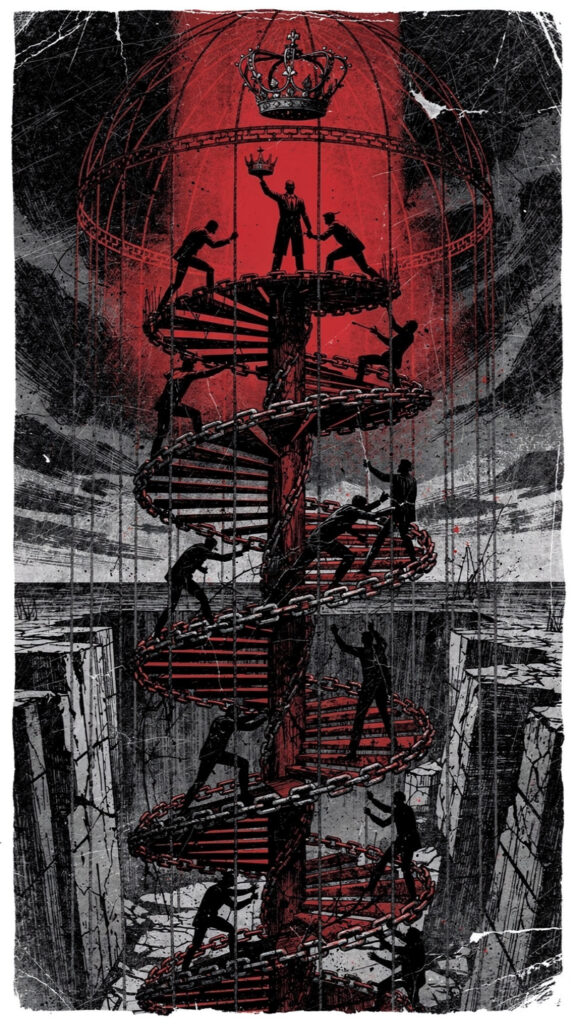
Intellectual Cowardice: The Refusal to Think Outside the Cage
If the “dream of the master” is the engine of oppression, then intellectual cowardice is the fuel that keeps it running. We sometimes mistake cowardice for a physical lack of bravery, the fear of a blow, or the dread of a prison cell, but the most dangerous form of cowardice is the refusal to think beyond the boundaries set by one’s own enemies.
The Comfort of the Known Evil
The “cage” is not just a set of physical restrictions; it is a mental framework. And within this cage, there are rules, rankings, and a clear, even though brutal, logic. Intellectual cowardice is the choice to master the logic of the cage rather than question why the cage exists in the first place.
It feels “easier and safer” to be a prisoner who knows how to navigate the yard than to be the one who suggests there is a world beyond the walls. Because to acknowledge the world outside requires a terrifying admission: That everything you have learned to value, status, rank, and the tiny increments of power you have scraped for is utterly worthless. The coward clings to the bars because the bars are the only things that give their life a sense of structure.
The Fallacy of “Reforming from Within”
One of the most common masks for intellectual cowardice is the plea of “pragmatism.” The aspiring oppressor will almost always tell themselves that they are simply being realistic. They will argue that to change the system, they must first reach the top of it.
But for them, this is very, very likely not a strategy for change; it is a strategy for conformity. Because by the time the “slave” has spent decades climbing the ladder of an evil system, their mind has been permanently reshaped by that ladder. You can not spend twenty years perfecting the art of the lashing and then expect to have the moral imagination to throw it away once it is in your hand. The “cage” does not just hold you; it molds you. True intellectual courage is the realization that you can not use the master’s tools to dismantle the master’s house.
The Fear of Moral Isolation
To think outside the cage is to be sometimes standing alone. When you are a slave dreaming of being a master, you have something in common with everyone else in the system. You share the same language, the same goals, and the same definitions of “success.”
But the moment you challenge the existence of the hierarchy itself, you become a threat to both the Master and the other Slaves. To the Master, you are a rebel; to the other Slaves, you are a mirror that reflects their own cowardice. Intellectual cowardice is, at its root, a fear of being an outcast. It is the desperate need to belong to something, even if that something is an engine of cruelty.
The Radical Act of Conceptual Liberation
Breaking free requires what philosophers call “epistemic disobedience.” It is the refusal to accept the definitions provided by the oppressor.
- If the system says “Power is the ability to hurt,” the courageous mind says “Power is the ability to heal.”
- If the system says “Value is determined by rank,” the courageous mind says “Value is inherent to humanity.”
The coward refuses this task because it is mentally taxing. It requires building a new philosophy from scratch, even though the old one offers you a seemingly comfortable, but bloody, seat at the table. Intellectual cowardice is the choice to remain a decorated prisoner rather than a naked, but free person.
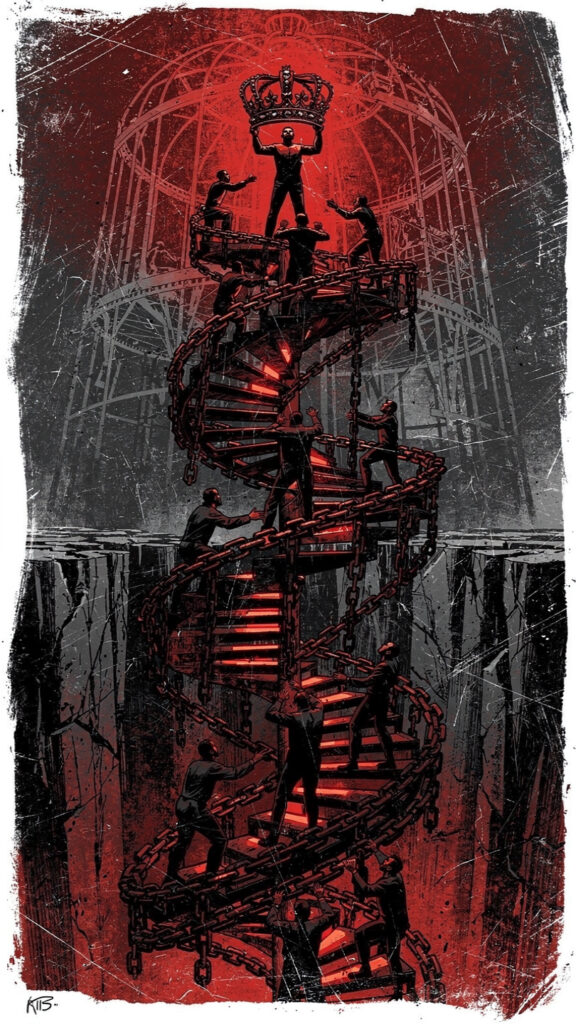
The “Promoted” Slave: A Case Study in False Liberty
We see this play out in modern structures constantly. Consider the entry-level employee who is bullied and overworked. And instead of advocating for better labor practices or cultural shifts, they tell themselves, “When I am the manager, I am going to make them work even harder just like I had to.”
And when that person finally reaches the position of “Master,” they do not bring liberation; they bring a more refined, perhaps even more bitter, version of the original evil. And they justify their actions with the phrase, “I paid my dues.” And this is the ultimate betrayal of the self, because by the time they feel they have “won,” they have become the very thing that once broke their spirit.
I want to assume that at some point in your life, directly or indirectly, you have heard that the human heart is a sanctuary, a private chamber where our values, beliefs, and true essence reside. We like to believe that this sanctuary is impenetrable, that no matter what the world throws at them, our moral compass will remain fixed, pointing toward the “True North” of our character. We look at the history of human cruelty, from the horrors of war to the small or maybe not so small betrayals of corporate greed, and we tell ourselves: “I would never do that.” We distance ourselves from the perpetrators, labeling them as “monsters” or “bad apples,” and in doing so, and for some of us, we speak truth, but for the rest of us, we are just granting ourselves a false sense of security.
And that, today, brings me to something I have been reading about: The Lucifer Effect. The “Lucifer Effect,” a term coined by psychologist Philip Zimbardo following the infamous Stanford Prison Experiment, and it suggests a much more haunting reality. It posits that the line between “good” and “evil” is not a fixed, impermeable wall, but a permeable membrane. It suggests that ordinary people, when placed in specific situational “barrels,” can be seduced, pressured, or slowly molded into committing acts they once thought were impossible. And as I read and reflect on this through the lens of faith and personal responsibility, it becomes clear that moral failure is rarely a sudden leap off a cliff. Instead, it is a slow, quiet slide down a slippery slope, driven by the subtle pressures of the systems we inhabit.
To remain virtuous is not a passive state of being; it is an active, daily work of waking the conscience and maintaining a relentless moral vigilance.
Continue Reading: Waking the Conscience: Moral Vigilance in the Face of Systemic Pressure
The Cost of the Dream
The tragedy of this dream is twofold. First, it exhausts the spirit. A life spent trying to become a master is a life spent in perpetual service to the system. You are never truly free if your identity is defined by your rank within an evil structure.
And the second is that it declines human progress. Every time a victim chooses to become an oppressor, the clock of human evolution resets. The “evil” is validated because it says to the world: “This system works so well that even those who hate it want to run it.” And this happens a lot in the relationship between man and politics.
In today’s world and time for so many people silence is often mistaken for wisdom, and neutrality for peace. Many say, “I don’t do politics,” as if disengagement is a sign of balance or maturity, but the Stoics, those ancient champions of reason, virtue, and courage would disagree a million times and more. To them, philosophy was not about escaping the world; it was about engaging with it rightly, and that means speaking up, standing up, and doing your part for the common good.
Stoicism has long been misunderstood by so many as emotional detachment or passivity, a calm retreat from the chaos of the world, but Marcus Aurelius was not meditating his way out of responsibility; he was meditating his way into it. He was an emperor facing war, famine, and political friction, and he used Stoic principles not to run from his duty, but to ground himself in it.
Stoicism calls us to live in accordance with nature, and part of that means fulfilling our role in society. To withdraw from public life, to be neutral, to claim we are “above” politics, is to neglect the very fabric of the human community we are meant to help sustain.
Continue Reading: You Don’t Get to Be Apolitical: The Stoic Duty to Stand Up and Speak
Breaking the Pattern: The Courage to Be Free
True freedom requires boldness; it requires the individual to look at a master, no matter how powerful, and say, “I do not want your job! I want your job to cease to exist!” And this is the path of the Moral Revolutionary. It involves:
Calling out the evil: Naming the system for what it is, even when you are currently benefiting from a small promotion within it.
Rejecting the “Ascension” Narrative: Refusing to use “paying your dues” as a justification for perpetuating harm.
Valuing Collective Liberation: Realizing that as long as there is a “master” and a “slave,” no one is truly free, not even the master, who is now a prisoner of the need to maintain control.
When the world feels corrupt, when institutions lose their way, and when leadership rewards power over principle, for good people, for some if not most, the temptation to withdraw grows stronger. It feels cleaner to detach, to retreat into our own moral solitude, convinced that purity means distance. But both Confucius and Seneca, separated by centuries and continents, warned against such detachment; they believed that the moral person; the one who knows “The Way,” has a duty NOT to flee from a broken world but to engage with it, even at personal cost.
Because if “The good” withdraw, who remains? If the virtuous stay silent, who speaks? And if those who see clearly turn away, who will guide the blind?
The world does NOT need more critics, pessimists, naysayers, sceptics, doubters, and cynics. It needs the courageous few who are willing to wrestle with complexity, to serve for good even in a corrupt system, and to hold their convictions even when surrounded by compromise.
Confucius once said, “When the state has the Way, accept a salary; when the state is without the Way, to accept a salary is shameful.” It was not a call to abandon public life, but to approach it with discernment, to know when one’s contribution serves the greater good and when it simply feeds decay.
This same struggle lived in Seneca, the Stoic philosopher who served under Nero’s corrupt regime. And for Seneca, the philosopher had a duty to serve society, to act in accordance with reason and virtue, not to retreat into contemplation, but by participating in Nero’s court, he became part of its evil. His later writings bear the weight of this paradox; how even good intentions can become compromised in the pursuit of influence.
Continue Reading: The Call to Engage: Why Good People Can’t Abandon a Broken System
Read Also: Circumstantial Saint: Is Your Integrity Built on Conviction or Constraint?
Read Also: Your Full Tenacity or Forfeiture: The Choice is Yours
Read Also: The Ekklesia Mandate: Raising Kingdom-Minded Culture Shapers
Conclusion
My dearest readers, the statement that a slave only dreams of becoming a master is a warning, not a prophecy. It warns us of the ease with which we can be seduced by the very things that hurt us.
Intellectual cowardice tells us to seek the lash so we can stop feeling it on our own backs, but moral courage tells us to break and cut the lash, even if we were the next in line to hold it. To move beyond this tragic dream, we must stop asking “How can I win?” and start asking “How can we all be free?”
Only when we stop dreaming of the throne of oppressor can we begin the real work of building a world where no one is forced to kneel.