In the modern landscape of personal development, there is a pervasive and dangerous misunderstanding of what it means to be a “good” person. We have been conditioned to believe that goodness is synonymous with harmlessness; that the person who is quiet, non-confrontational, and incapable of causing a stir is, by default, the most virtuous among us, but this is a profound moral error.
True virtue is not the absence of capacity; it is the presence of power under perfect restraint. And as the legendary martial artist Bruce Lee puts it, “It is better to be a warrior in a garden than being a gardener in war.” This sentiment serves as the foundation for the mandate of formidable character: The requirement that a person of faith and integrity must first become strong enough to be dangerous before they can truly claim the virtue of being peaceful.
The Fallacy of Harmlessness
The core of a formidable character lies in the rejection of passive harmlessness in favor of active, disciplined strength. Most people walk through life confusing “niceness” with “goodness,” failing to realize that being nice is most likely just a mask for a lack of options. If you lack the strength to stand up for yourself or the courage to speak an uncomfortable truth, your peacefulness is not a moral choice; it is a necessity of your weakness.
And as Jordan Peterson said in one of his interviews, there is no morality in being incapable of violence; if you are a “sheep,” you are merely acting according to a nature that has no other choice. True morality requires that you first become a formidable force. Peterson also added that if you are incapable of being a monster, you are not actually virtuous; you are just harmless. A truly good person is someone who is dangerous but keeps their “sword in check” through absolute self-mastery.
And this capacity for danger, paired with the capacity for control, is what brings about genuine virtue. Without the ability to be formidable, your self-control has no meaning because you have nothing to control. And so, you must build your physical, mental, and spiritual competence until you are a person of weight and consequence. And by developing your “claws,” you gain the agency to choose peace over chaos, embodying the timeless wisdom that it is better to be a warrior in a garden than being a gardener in war. When you move away from the safety of timidity and sharpen your character, you ensure that your presence commands respect not through noise, but through the quiet gravity of a strength that is fully mastered and directed toward the good.
Peace is a noble pursuit and desired by most if not all, but it is rarely secured without cost. We most times think of peace as the absence of conflict, a calm state achieved through kindness, diplomacy, or surrender, but history, psychology, and even personal experience tell a different story: Sometimes lasting peace is not given; it is defended.
The ancient Latin phrase “Si vis pacem, para bellum” translated in English to mean “If you want peace, prepare for war,” may sound harsh at first, but its wisdom runs deep. Whether in nations, relationships, or our own inner lives, peace often requires strength, vigilance, and the willingness to confront threats before they grow.
The paradox of peace: Why true peace (tranquility) is not passive, how preparation is a form of protection, and how we must be willing to engage in battle, externally or internally, if we are to secure the peace we seek.
Continue Reading: If You Want Peace, Prepare For War
The Theology of the Warrior
The true essence of the warrior-spirit in theology is found in the “weight” of one’s presence, an aura that Jordan Peterson describes as being a “formidable force.” Throughout history, figures of great respect were never admired for their inability to act, but for their mastery over an immense capacity for action.
Moses did not lead millions through the desert with mere politeness; he did so with an authority that came face-to-face with Pharaoh and commanded the elements. And King David was not a pacifist, but a warrior-poet who understood that the same hands that played the harp were capable of slaying giants. These men were not accidental heroes; they were individuals who had integrated their “inner monster,” as Peterson puts it, into a disciplined structure of higher purpose. This integration is what transforms raw, dangerous power into a tool for divine justice and protection.
And the linguistic root of “meekness” further clarifies this mandate for strength. In the original Greek, the word praus was used to describe a warhorse that had been trained for battle, a creature of thunderous power and violent potential that had been brought under the absolute control of the bridle. This horse does not lose its strength; it gains a master, and that is the definition of power made useful. Jordan Peterson said that “if you are incapable of being a monster, you are not actually virtuous; you are just harmless.” Virtue is the active choice of the strong to remain at peace, not the passive state of the weak who have no other option. By becoming formidable, you fulfill the role of the “warrior in the garden,” possessing the sharpened skills necessary to defend the sanctuary of your values while choosing the serenity of the garden over the chaos of the world.
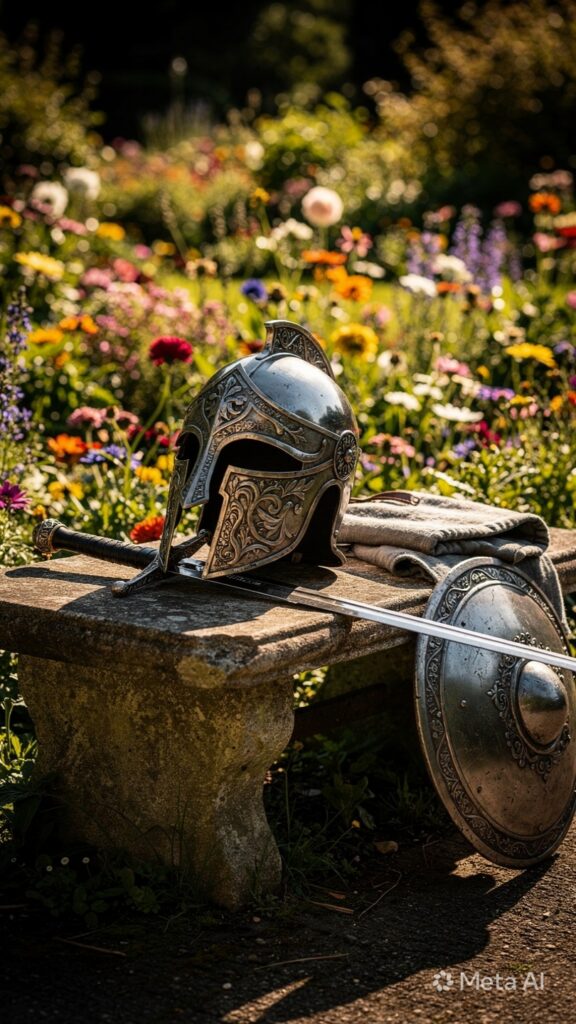
To live as a warrior in a garden requires a relentless commitment to competence across every domain of life. When you are competent, you are dangerous to the forces of mediocrity and falsehood. You become a person of “gravity,” someone whose silence carries more weight than the loud posturing of the insecure. This gravity is the byproduct of having faced your own capacity for chaos and deciding, with iron will, to bind that energy to the service of the good. Jordan Peterson said that it takes a tremendous amount of strength to be truly “good,” because goodness is a difficult, high-stakes achievement, not a default setting for the timid. And by embracing the mandate of the formidable character, you ensure that you are never the “gardener in a war” who is easily trampled, but the disciplined warrior who maintains the peace precisely because you are prepared for the conflict.
I read that in the winter of 1860, the United States was a house rapidly dividing against itself. As Southern states intensified their aggression and whispered of disunion, many in the North were paralyzed by a desire for peace at any cost. There was a prevailing assumption among Southern aggressors that the North would eventually fold, as it had during the Missouri Compromise of 1820 and the Compromise of 1850. They expected a lack of resolve; they expected the opposition to evaporate. They were not counting on men like James A. Garfield.
Garfield, who eventually became the 20th President of the United States, was a man who deeply deprecated war. He found no glory in the shedding of blood and no joy in the prospect of civil strife. But, as the shadow of conflict came slowly, he uttered words that perfectly encapsulate a philosophy of living that I think is very, very much as relevant today as it was on the days of the Civil War: “Of course I deprecate war, but if it is brought to my door, the bringer will find me home.”
To be “at home” when trouble knocks is not about being in a physical building; it is a masterclass in the Stoic approach to life. It is the realization that while we can not control the guest who knocks, we have absolute authority over the state of the house they find when the door is opened.
Continue Reading: James Garfield Advice and The Stoic Art of Standing Your Ground
The Path to Being Formidable
The path to being formidable begins with a radical shift in how you view competence. In a world that prizes convenience, true strength is found in the relentless pursuit of mastery over your mind, body, and craft. And again, as Jordan Peterson argues, a person who is useless can not truly be good; they are merely unable to act. To be formidable is to be a person of consequence, someone whose skills are so sharpened that their presence alone acts as a stabilizing force in the midst of chaos. This is not about seeking power for its own sake, but about becoming a reliable anchor for those who depend on you. By seeking mastery in your daily drills, you are ensuring that you possess the weight of moral authority, moving away from the safety of timidity to become the warrior who is prepared for the inevitable storms of life.
This transformation requires you to face and integrate your “inner monster,” acknowledging that you have the capacity for greatness and, by extension, the capacity for destruction. Jordan Peterson also said that morality is found in the control of that power, not in its absence. And as such, if you are incapable of standing your ground or speaking a harsh truth, you are not being virtuous; you are being steamrolled. The formidable character is built in the tension between power and restraint; it is the “sword” that remains ready for justice but very, very much committed to peace. And so, you must train until you are a formidable force, someone who is dangerous enough to be respected and disciplined enough to be trusted. And this is the difference between the “sheep” who is peaceful by nature and the “lion” who is peaceful by choice.
This path leads to a life of “Strength Under Control,” where your actions align so closely with your purpose that your character becomes your primary witness. When you choose discipline over impulse, you are signaling that you are governed by something higher than your immediate feelings. You are living the reality that it is better to be a warrior in a garden than being a gardener in war. And by cultivating this formidable nature, you ensure that you are not just a bystander in a broken world, but an active participant who is equipped to protect, provide, and prevail. You become a sanctuary of reliability, possessing the gravity of a character that has been tested in the fires of self-mastery and emerged both strong and pure.
To understand the strength of “home,” we must first understand what the aggressor expects. Whether it is a political rival, a toxic personality, or a sudden life crisis, “trouble” usually thrives on the assumption of vacancy, when we are not in control, in charge of our home, our space.
I once listened to a podcast, and it was said that when Julius Caesar crossed the Rubicon, he banked on the idea that Cato the Younger’s principles were merely intellectual ornaments and just head knowledge, just talks; that when the steel of the legions arrived, Cato would be out, fleeing to safety or negotiating his integrity for survival. Julius Caesar assumed the house was empty, but he was mistaken, because Cato was home, and his presence forced Caesar to confront a moral resistance that no army could truly defeat.
In modern life, we often play into this illusion; we live “away from home” when we outsource our happiness to external validation, when we let our values shift based on the current social climate, or when we avoid the hard conversations that define our boundaries. When trouble knocks on the door of a person who has no internal residence, that person evaporates; they panic, they compromise their core identity, or they become the very thing they claim to hate.
Continue Reading: James Garfield Advice and The Stoic Art of Standing Your Ground
The Gravity of Moral Authority
There is a specific weight to a person of character, a “gravity” that commands respect without a title. This gravity comes from a strict regard for truth and a purity of motive. When you have done the hard work of mastering your impulses, you no longer need to raise your voice to be heard.
In a similar way, urge the younger men to be self-restrained and to behave prudently [taking life seriously]. And show your own self in all respects to be a pattern and a model of good deeds and works, teaching what is unadulterated, showing gravity [having the strictest regard for truth and purity of motive], with dignity and seriousness.
Titus 2:6-7 (AMPC)
A formidable character acts as an obstacle to chaos. Just as a strong nation prevents war through its readiness for it, a strong individual prevents conflict through the sheer presence of their integrity. If you have not developed this strength, you will find yourself overwhelmed by the temptations and pressures of the world. You will be the gardener caught in a war, unable to defend the very “garden” of your values and family.
Wanting, seeking and needing peace by some is misunderstood as weakness, an escape from confrontation or a refusal to fight, and that is very far from the truth. The truth is that the most enduring peace is born not from passivity, but from the presence of strength. So paradoxically, it is the nations, people, and minds that are ready for war that often avoid it.
Think of a well-armed country with disciplined forces and clear boundaries; its strength alone sends a message: We are not looking for conflict, but we are prepared to defend what matters. And that quiet readiness can prevent provocation, but on the other hand, weakness, real or perceived, invites aggression because the unguarded are the easiest to exploit. And the same principle applies beyond geography.
- In relationships, a person with firm boundaries is less likely to be manipulated.
- In business, a prepared leader is less likely to be blindsided.
- In life, when we develop mental and emotional resilience, we are less likely to be overwhelmed by fear, stress, or opposition.
And by this, peace is not the reward of avoidance; it is the fruit of preparedness. By preparing for war, not to cause harm, but to prevent it, we create the conditions where peace can take root, grow and last.
Continue Reading: If You Want Peace, Prepare For War
The Virtue of Self-Restraint
The ultimate goal of becoming formidable is not to use your power for selfish gain, but to hold it in reserve for when it is truly needed. Self-restraint is the highest form of stewardship. It is the ability to pause when the world says rush, and to stay pure when temptation whispers.
Those who have the capacity for danger but keep it under the strict command of their conscience are those who truly “inherit the earth.” They are stable, reliable, and trustworthy, and they are the warriors in the garden, enjoying the peace precisely because they are the ones capable of defending it. They live by the truth that “It is better to be a warrior in a garden than being a gardener in war.”
You know in today’s world where impulsiveness is celebrated and seriousness is mistaken for rigidity, Apostle Paul’s counsel to Titus tells us something very very important with quiet authority and timeless relevance:
In a similar way, urge the younger men to be self-restrained and to behave prudently [taking life seriously]. And show your own self in all respects to be a pattern and a model of good deeds and works, teaching what is unadulterated, showing gravity [having the strictest regard for truth and purity of motive], with dignity and seriousness. – Titus 2:6-7 (AMPC)
Apostle Paul was not just giving advice on manners; he was laying out a blueprint for spiritual maturity. He was calling believers, especially the young, to embrace self-restraint and prudence as marks of wisdom and strength.
Continue Reading: Take Life Seriously: The Call to Self-Restraint and Godly Discipline
Living Above Reproach
Discipline is the bridge between who you are and who you are called to be. The mandate for the formidable character requires that your actions align so closely with your words that even your critics find it difficult to find fault. This is not about perfection; it is about witness.
When you choose discipline over impulse, you are signaling to the world that you are governed by something higher than your feelings. You are proving that you are a reliable anchor in a shifting world. This level of character is not built in a day; it is built in the daily “drills” of life: The early mornings, the honest conversations, and the refusal to take the easy path.
Again, my dearest readers, the mandate for the formidable character requires that your actions align so closely with your words that even your critics find it difficult to find fault. And this reminds me of what Jesus said in the book of John 14:30
I will not say much more to you, for the prince of this world is coming. He has no hold (power) over me.
John 14:30
Read Also: Stacking the Evidence: How to Become the Man You Think You Are
Read Also: Your Full Tenacity or Forfeiture: The Choice is Yours
Read Also: The Tragic Dream of the Aspiring Oppressor
Conclusion
My dearest and faithful readers, maturity is not measured by age, but by the weight of your responsibility and the control of your character. You have a choice in how you face the world. You can remain “harmless,” hoping that life treats you kindly, or you can do the difficult work of becoming formidable, developing your mind, your body, and your spirit into a force for good.
The world does not need more “nice” people who crumble under pressure. It needs warriors of virtue who are capable of standing in the gap. It needs individuals who have mastered their “swords” and chosen to walk in peace. And as you build your life and your legacy, never forget the wisdom that has guided the strong for generations: “It is better to be a warrior in a garden than being a gardener in war.”